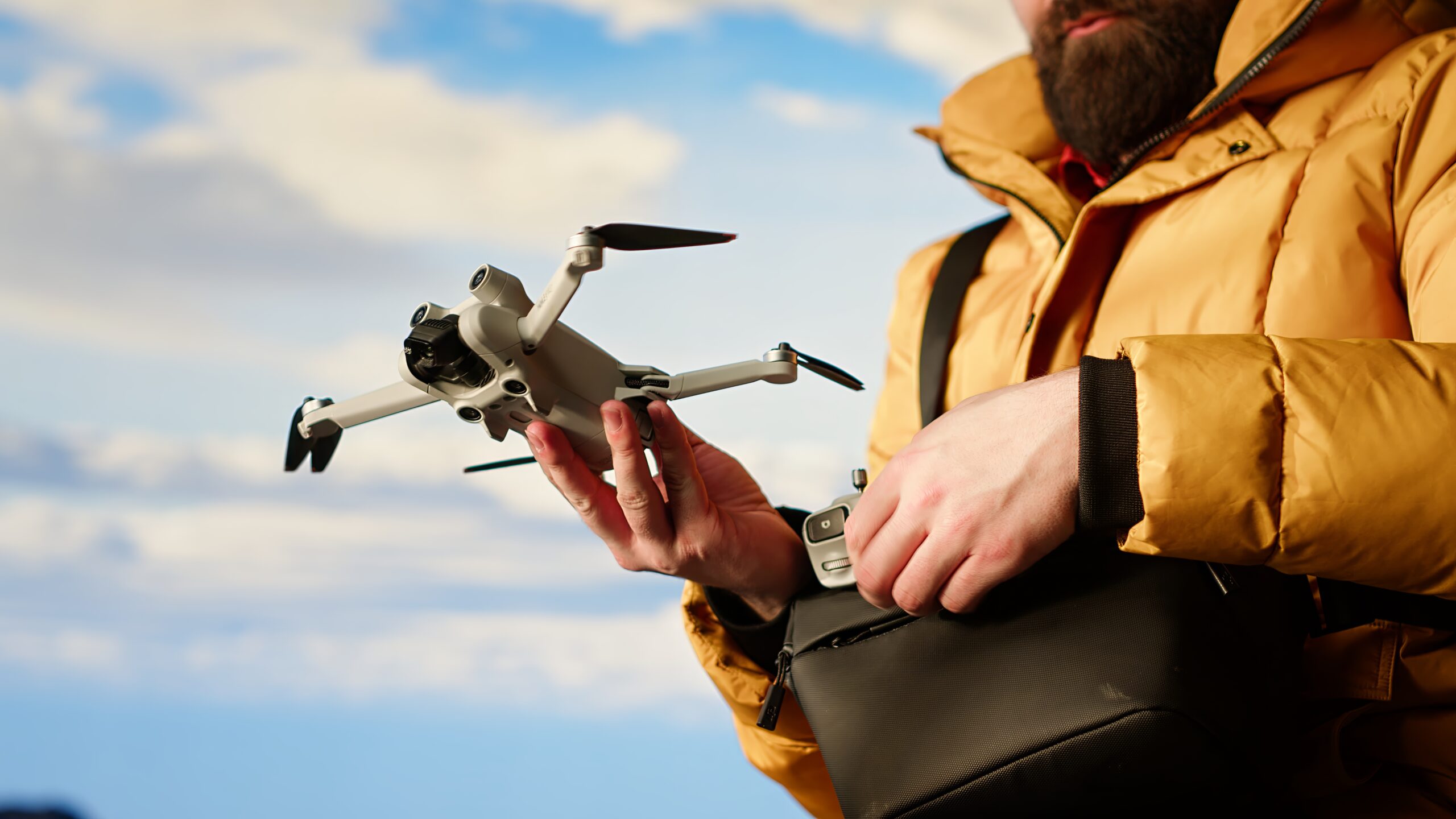
The very first consideration has been established as time management and safety in the fast-moving world of building and land development. Old methods of surveying very often require manual labor, time-consuming processes, and expose surveyors to potentially dangerous situations. But now, with the introduction of drone surveying, the industry is experiencing a complete turning point in the way sites are inspected, mapped, and monitored.
As a Drone LiDAR Mapping company, we have partnered with Skyelink to ensure the very best quality and precision in airborne data which will assist builders, architects, and engineers in making decisions that are smarter, safer, and faster. Let’s take a look at the effects of drone building surveys on project management and why they are going to be the dominant means of construction site analysis in the future.
What Are Drone Building Surveys?
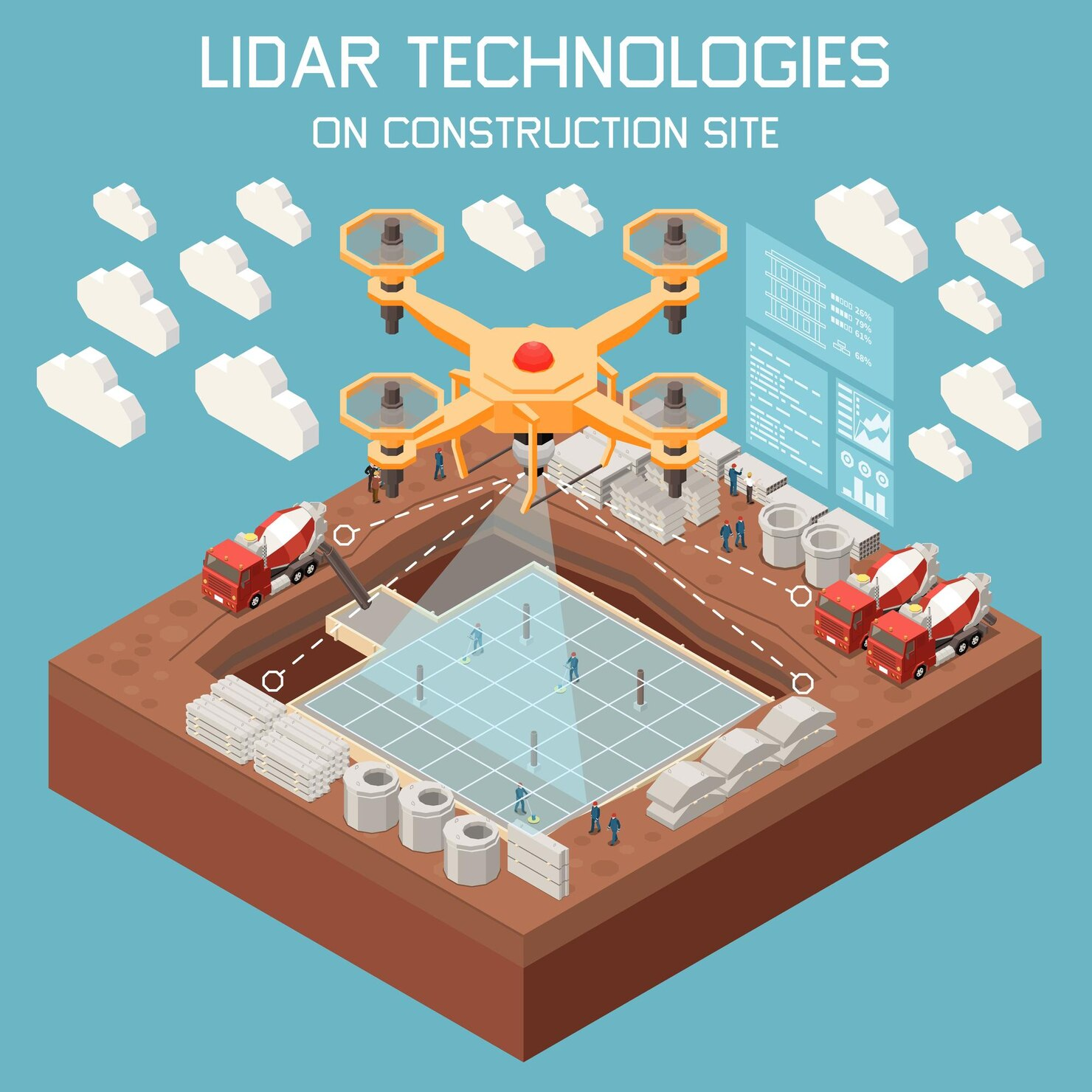
Basically, drone building surveys consist of using unmanned aerial vehicles (UAVs) that are fitted with high-resolution cameras, LiDAR sensors, and GPS technology to gather accurate information about a construction site or a building. Drones are responsible for collecting shots and 3D spatial data which can be employed later for taking measurements, assessing structures, and monitoring the progress.
The major difference between drone surveying and the conventional method is the area covered—drone surveys can cover large and intricate areas in a relatively short time and in a safe manner without having to face the risk of unstable terrain.
Enhancing Accuracy with Advanced Technology
One of the main factors that are driving the trend of drone land surveying over traditional methods is the higher accuracy of results. The use of advanced technologies such as LiDAR and photogrammetry allows the drones to capture large amounts of data from different vantage points thus resulting in the provision of very detailed 3D models as well as digital elevation maps.
The use of these digital models is in:
Calculating the volume very accurately (like, earthworks, stockpile measurements).
Discovering structural defects or other considerations with regards to elevation that need to be addressed.
Creating layouts and devising drainage systems with an accuracy level of centimeters.
Also, professional-grade UAVs that are being used for drone surveys, the costs of topographic surveying by drones still remain considerably lower compared to those of traditional surveys—without any quality being compromised. This, in fact, makes drones suitable for all kinds of projects, be it a residential build or a massive infrastructure development, in terms of the cost, thus, being the most efficient choice.
Ensuring Safety On-Site
It is a well-known fact that construction sites are always regarded as dangerous places with various risks like fall accidents, the instability of structures, and the operating of heavy machines. Drones totally get rid of the necessity for surveyors to physically go to places that are either unsafe or hard to get to, like rooftops, steep slopes, or the top floors of high-rise buildings.
Flying over inspections done by drones assures that the data is collected safely while the workers are left in the area of the secure distance. This drastically minimizes the occurrence of accidents in the workplace and at the same time increases the adherence to the regulation of occupational safety.
In addition, the drone surveys are very suitable for post-disaster assessment—for example, after a storm, flood, or fire—where sending humans would pose a risk.
Time and Money Savings
The conventional methods of surveying can last from days to weeks, and this is especially true in the case of large or complicated sites. On the other hand, drones will manage to finish the survey in a matter of only a few hours. The data that is collected will automatically be turned into precise maps and 3D models which will be practically shared with the project teams at once.
It is then that this efficiency is translated into savings in cost directly. To tell the truth the cost of drone land surveying may differ from site to site and according to the equipment but usually, it is much less expensive than the manual process. The combination of the reduction in labor hours, speedy processing and fewer site disruptions makes it easy for drone surveys to become a smart investment for contractors and real estate developers.
Progress Monitoring in Real-Time
Drones are beyond the first site surveys, the construction monitoring tools that cannot be replaced. The data that regular drone flights capture is the same for comparing site progress and the time allowed for the project. With the deployment of high-resolution images, the project managers can easily spot any deviation, and measure the development and keep the stakeholders involved through visual reports.
Environmental and Compliance Benefits
Sustainability is a predominant issue in today’s construction industry, which is focused on being environmentally friendly. By conducting surveys with drones, carbon emissions are considerably reduced, as the use of heavy ground equipment decreases.
Drones are also very helpful in monitoring the different zones affected by environmental changes, recording the growth of vegetation, or checking if the regulations concerning land use and zoning are being followed. The geospatial data the drones collect is a great support for eco-friendly land-use planning and resource allocation.
Applications Across Multiple Industries
Drone surveys are not restricted to construction—they are overhauling many industries such as:
Urban planning and infrastructure – for the development of smart cities and transportation networks.
Mining and quarrying – for determination of stockpile volume and check on safety measures.
Agriculture – for delineating areas of irrigation and recognizing the patterns of crop growth.
Renewable energy – for the inspection of solar farms and wind installations.
In more or less the same manner, all these applications benefit from the basic aspects of accuracy, efficiency, and safety.
Why Choose Drone LiDAR Mapping and Skyelink?
With the help of Skyelink’s modern drone technology at Drone LiDAR Mapping, we provide a hassle-free experience right from data capture to analysis. The drone surveying services we offer are meant to provide clients with the most trustworthy aerial insights for their planning, construction, and inspection projects.
We know that every site is different when it comes to challenges—be it regarding the site’s topography, size, or surrounding environment—and our professionals will modify each survey to fit your needs perfectly.
Focusing on precision, compliance, and innovation, our team makes sure that every project is equipped with actionable data and real-world accuracy.
Final Thoughts
Drone surveys of building sites have turned out to be great helpers in the construction and land management sectors. Their benefits are many—better accuracy, safer environments, less expenditure, and faster completion times—offer an eco-friendly and data-driven way for site analysis.
In the future, as tech continues to progress, drones will definitely be a major part of the whole process—construction, planning, and monitoring of the infrastructure.
In case you want to use all the advantages of drone surveying services, make a partner with Drone LiDAR Mapping and Skyelink today for your site that is safe and accurate like never before.