Land development often starts with one big hurdle: bad data. That’s where everything goes sideways. Inaccurate site details, incomplete topography, and outdated surveys. Sound familiar?
According to a 2020 report by Autodesk and FMI, poor data accounts for 14% of avoidable construction rework, which costs the industry over $1.84 trillion. That’s no small hiccup. It’s a budget-breaker. So, how do you get ahead of it?
Start with the right tools. And nothing beats using drones for surveying and mapping when it comes to capturing site data that’s fast, clear, and accurate.
Why Drones for Surveying and Mapping Make Sense
Traditional surveys talk the old way. Tripods. Crews in high-vis. Long hours walking the site, measuring everything manually.
Sure, it works. But it takes time. Too much time. And if your site is large, overgrown, or uneven? Expect more delays. Traditional surveys can also miss important details, such as minor elevation shifts or early signs of drainage issues.
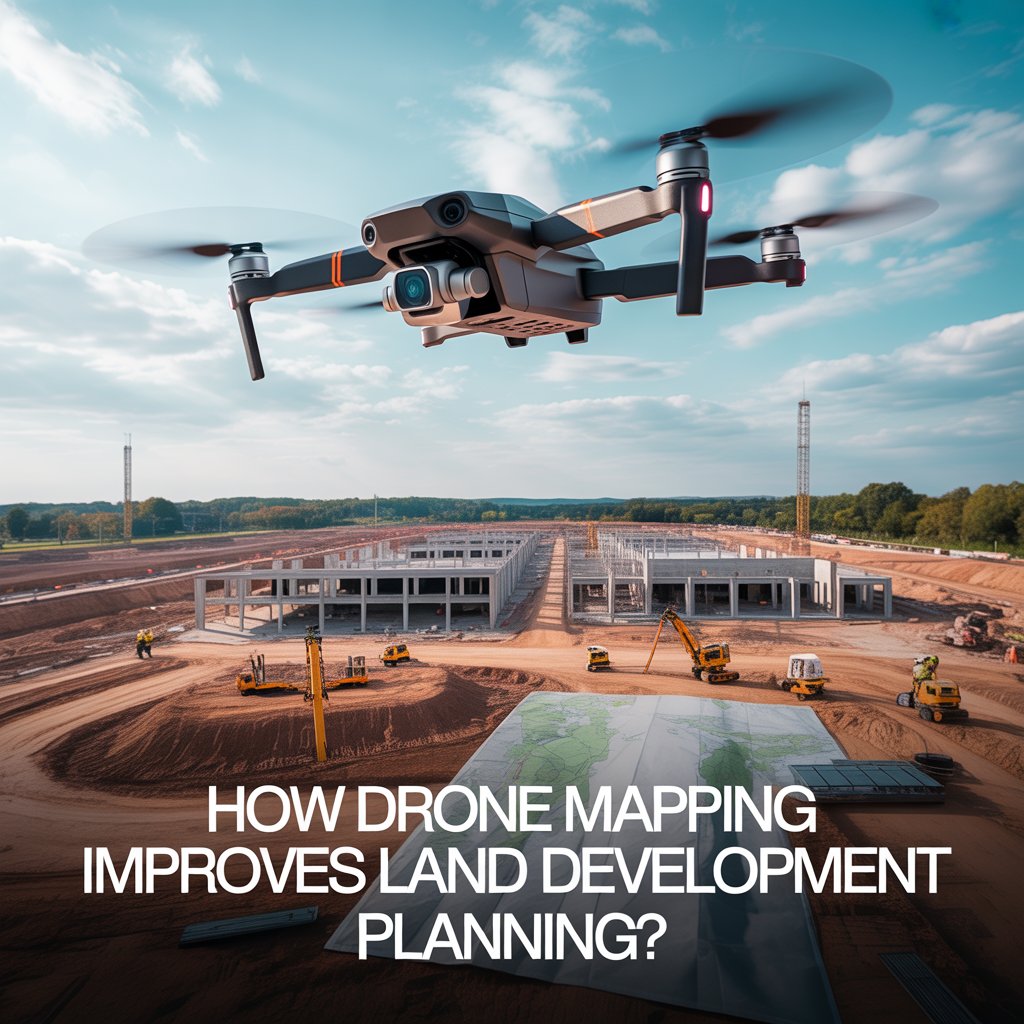
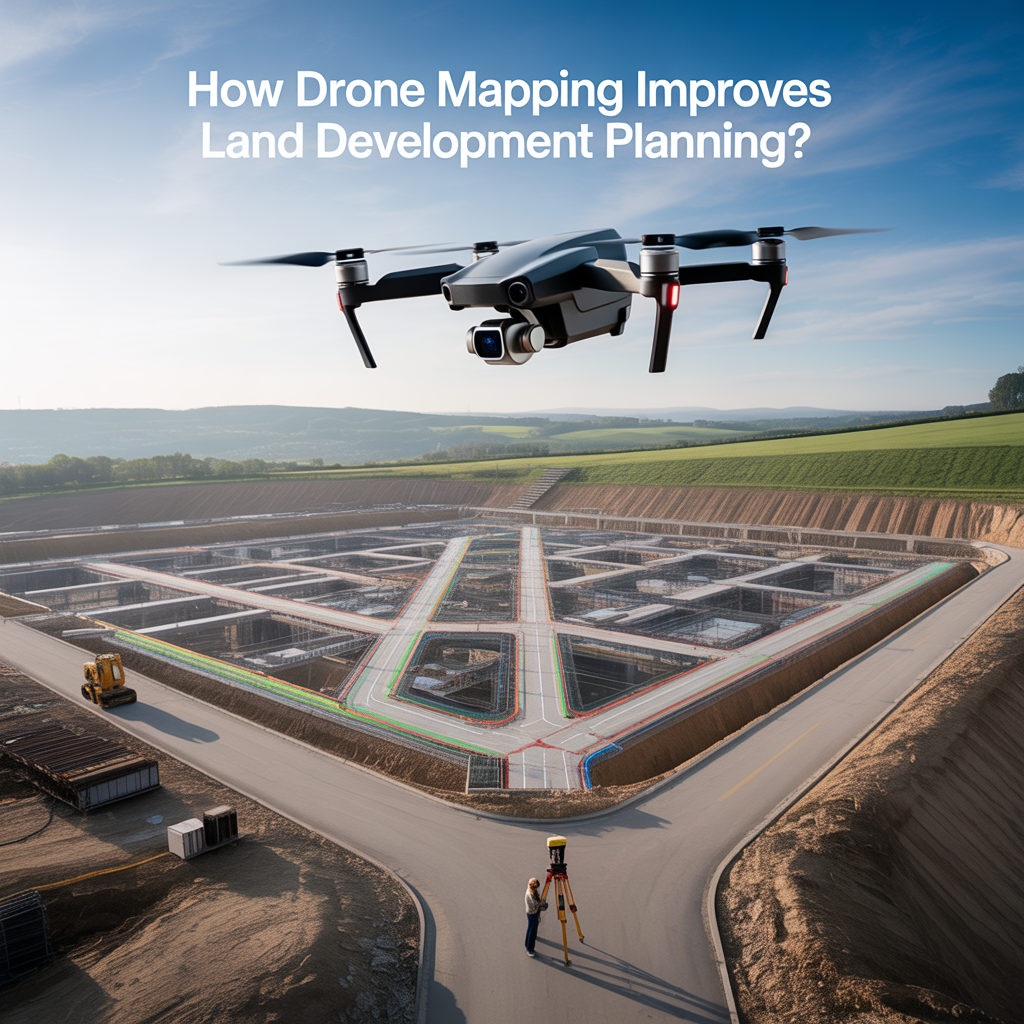
Land surveying drones aren’t just flashy gadgets. They’re legit tools for anyone who wants to start a project on solid ground. These little flyers zoom over your site, snap high-resolution images or collect LiDAR data. Then, they turn it all into super-detailed 2D maps or 3D models.
Let’s dive into how this actually helps land developers plan better.
1. Speed Like You’ve Never Seen
Drone surveys are fast.
A large area that might take ground crews days can be captured in just a few hours. The data gets processed and delivered in one to three days, depending on complexity. That means no long wait between concept and action. The sooner you get the data, the sooner you can start building.
2. Better Data = Smarter Plans
Accuracy matters when you’re working on tight budgets and tighter deadlines. Drones capture thousands of data points per second. That gives you highly accurate topographic maps, contour lines, 3D terrain models, and more. This kind of data helps you plan layouts, roads, and drainage systems with way more confidence.
You’re not guessing. You’re designing with precision.
3. Safer Surveying for Your Crew
Some land is just tough to walk on. Steep slopes, wetlands, and unstable ground are risky and time-consuming.
With land surveying drones, you keep your team safe on the ground while the drone handles the hard-to-reach areas. No climbing. No wading. Just clean, safe, and remote data capture.
It’s peace of mind in a flight plan.
4. Meet ALTA Survey Needs Faster
Big developments often require strict mapping standards, especially under ALTA survey requirements. These demand detailed information on boundaries, easements, utilities, improvements, and terrain.
Drones can quickly gather the kind of surface data needed to support these requirements. While you’ll still need licensed surveyors for legal certification, drones cut down on time and reduce the number of field visits needed.
5. Keep Everyone in the Loop
Drone maps aren’t just for engineers. They’re easy to comprehend, easy to share, and look sharp in presentations.
Need to update stakeholders? Review designs with architects? Explain changes to the council? Drone visuals make it simple. Real images. Real terrain. Real clarity.
No more confusion over technical drawings. Just real-world data that everyone can follow.
6. Support Every Stage of Development
Here’s the beauty of drone mapping—it’s useful at every phase:
- Planning: Map terrain, check elevation, and assess land access.
- Designing: Overlay data with CAD plans and identify issues early.
- Construction: Track progress, calculate volumes, and inspect grade changes.
- Post-build: Verify drainage, update GIS records, and complete final reports.
Drones for surveying and mapping are not a one-time thing. It’s a tool you can keep using from start to finish.
What Drone Data Can Deliver
Here’s what you can expect from a quality drone mapping service:
- 2D orthomosaic imagery
- High-resolution aerial photos
- Digital elevation models (DEMs)
- 3D terrain and surface models
- Contour maps
- Volumetric measurements
- Infrared or thermal imaging (if needed)
All processed and delivered in formats you can actually use—whether it’s AutoCAD, GIS, or straight-up visual maps.
What Makes a Good Drone Mapping Provider?
Here’s what to look for:
- Licensed and insured operators
- High-grade drones (with LiDAR or RTK tech)
- Experience with land planning and survey workflows
- Fast turnaround times
- File delivery that suits your systems
And of course, a team that’s easy to work with. Communication matters just as much as the data.
Final Thoughts
Land development is too big to leave to guesswork. With drones for surveying and mapping, you’re getting fast, accurate, and clear data that helps you plan smarter, work safer, and build better.
From meeting ALTA survey requirements to cutting down costly delays, drone surveys give you the edge. No more waiting weeks for updates. No more risking worker safety. No more basing plans on rough estimates.
Drone LiDAR Mapping offers professional-grade drone surveys that help developers, architects, and engineers move faster with confidence. We deliver the data you need to build what’s next.
Ready to see your land from a higher perspective? Let’s get mapping.