
The construction, engineering, and land development industries have seen a monumental shift to drone technology for surveying purposes. As we grow closer to 2025, understanding drone topographic survey cost has become increasingly important for project managers, engineers, and property developers looking to make the best use of their surveying budgets, while maintaining accuracy and efficiency.
Understanding Drone Topographic Surveying
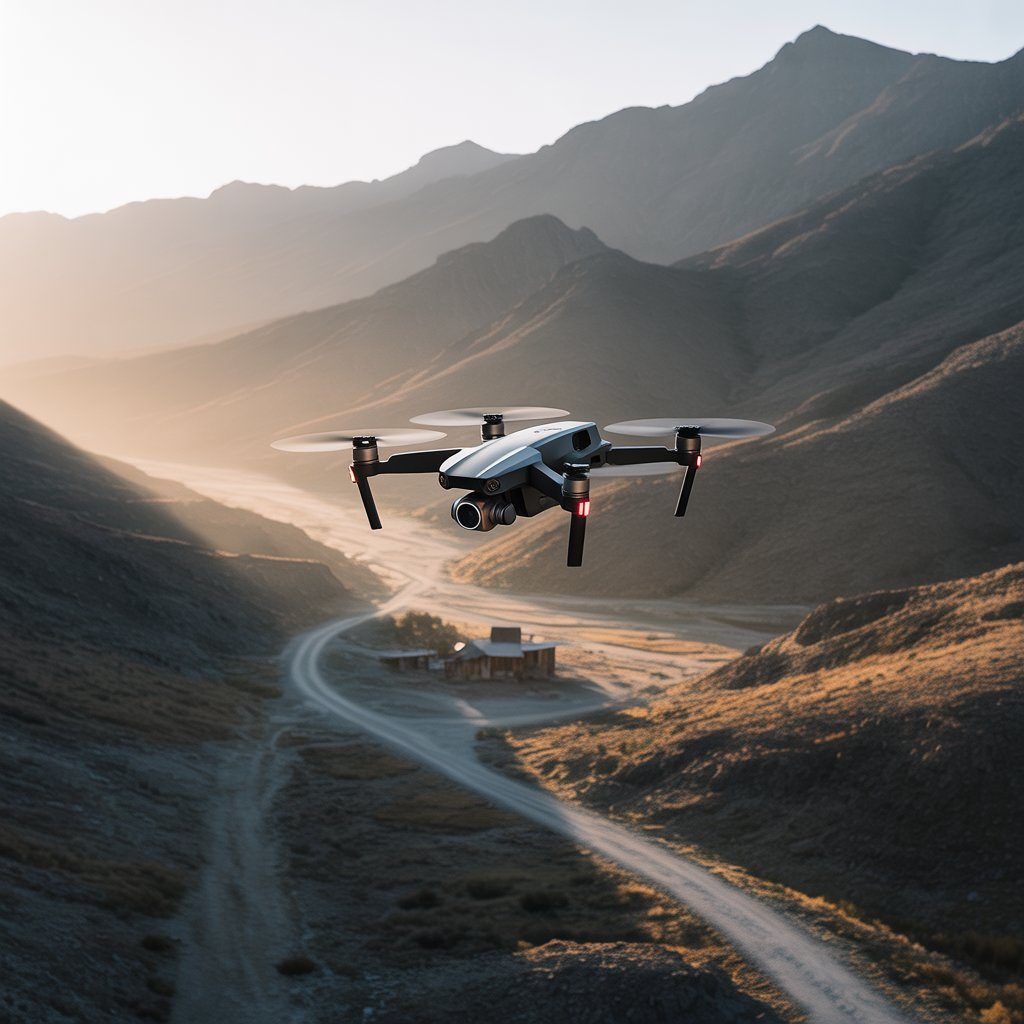
The field of drone topographic surveying is a contemporary method of surveying land features, elevations, and terrain characteristics. Ideally, surveying has typically involved a large ground crew and time-consuming aspects in surveying data collection. Drone land surveying uses an unmanned aerial vehicle (UAV) that is outfitted with several high-resolution cameras, laser LiDAR sensors, and also a precision GPS receiver to take measurements from the air.
The overall astonishing growth in popularity is largely due to the speeds at which drone surveying can gather data, the capability to fly unmanned aerial vehicles (UAVs) in difficult terrain while keeping the ground team a safe distance away, and the advanced photogrammetry software that can produce 3D models and contour maps that are just as accurate as conventional surveying processes. The technology has not only matured, but there are many aspects of utilizing a drone for surveying that can be completed on smaller projects like a residential development that has numerous stages or larger projects like a significant infrastructure project.
Current Drone Topographic Survey Cost Breakdown
The cost of a drone topographic survey in 2025 varies widely due to many different variables, however industry norms have developed that will serve as useful guidelines for planning purposes. Familiarity with these cost structures helps project managers make informed choices about their survey requests.
With regards to small residential properties under 5 acres, drone land surveying cost was generally between $1200 and
$3500. This cost range covers basic topographical maps with standard accuracy requirements, including the ability to deliver data in common formats such as AutoCAD drawings and PDF reports. Again, these maps were used for a variety of residential applications including residential developments, septic system planning, and small construction sites.
Medium commercial/industrial properties between 5 and 50 acres incur drone topographic survey cost ranging from $3500 - $12000. Often these projects are requesting a higher standard of accuracy, numerous data deliverables, and additional services including volumetric calculations or specialized mapping deliverables. The added complexity and processing requirements justifies a greater expense.
Large scale projects beyond 50 acres can achieve significant discounts owing to the economics of scale, typically ranging from $12,000 to over $50,000. These larger projects will often include additional technologies, such as LiDAR integration, the use of real-time kinematic (RTK) GPS corrections, and typically a much larger level of inferred data analytics that informs major infrastructure development, large mine operations, or agricultural spatial reasoning and planning.
Factors Influencing Drone Land Surveying Cost
There are several important factors that affect the final cost of drone land surveying for any project. By understanding these issues, clients will have a much better opportunity to estimate their investment in surveying and communicate appropriately with their service providers.
1. Project Size and Complexity: The larger the project area will be advantageous and typically reduce the cost per acre due to the economies of scales. However, if the property is complex – steep, wet, thick vegetation, elevation changes, difficult access locations – it affects the pricing despite if its large. Also, urban projects with lots of flight restrictions and safe flight envelopes will add to the level of planning and organizing for a project.
2. Accuracy Requirements: There is a cost for going to a standard mapped accuracy that could be used for overall determination and planning; compared to going with survey grade accuracy for legal boundary or engineering design work. Going to high-accuracy survey-grade work requires ground control points, specialized equipment, and an increasing amount of time for processing which invariably increases the cost of the overall project.
3. Data Deliverables: The most basic deliverables will cost the least; similar in not having a useable map of the data, which would be the cost of orthomosaic maps and elevation models, that are the least complex deliverables. More complex deliverables like contour maps, cross sections, volumetric calculations, and CAD integration can effect pricing due to the additional processing and expertise required.
4. Timeline and Urgency: a rush project will require the project to be expedited from the normal workflow which in most cases adds a premium to the final price; as you can expect this could be as much as 25-50%. Therefore for best prices you want to into a normal time frame of 7-14 business days.
Comparing Traditional vs. Drone Surveying Costs
In most use cases, traditional ground-based surveying tends to cost 2-5 times more than the same land surveying from drone technology. For example, a normal topographic survey of a typical 20-acre site would probably cost $15,000-25,000 and a time frame of 2-3 weeks to get it completed. A similar topographic job using drone technology could be done for $6,000-10,000 and completed in just a few few days.
Most of the time the savings in time alone will justify the cost of drone surveying. Traditional surveying has the surveyor physically walking the entire properties, taking a moment to set their equipment in several locations, and then taking manual measures to record elevations and features of the property. The costs of drone topographic surveying are a fraction of the time in the field, significantly reducing the amount of time you pay for in the surveyor’s labor.
There are still situations that are better suited to traditional methods. Properties that are completely covered with trees, areas that have a specific area that needs boundary determination, or projects that need legal-grade accuracy for use in court. These situations may better benefit traditional surveying methods or may need a hybrid method of a combination of traditional and drone surveying.
Getting the Best Value for Your Investment
Maximizing value from your drone land surveying cost investment requires careful planning and clear communication with service providers. Start by clearly defining your project requirements, including intended use of the survey data, required accuracy levels, and preferred deliverable formats.
Obtain quotes from multiple qualified providers, ensuring they understand your specific needs and timeline. Reputable drone surveying companies should provide detailed proposals outlining exactly what services are included, data accuracy specifications, and delivery schedules.
Consider the long-term value of comprehensive data collection. While basic mapping might meet immediate needs, investing in additional data capture during the initial survey often proves more cost-effective than returning for supplementary surveys later.
Conclusion
Drone topographic survey cost in 2025 reflects a mature industry offering competitive pricing for high-quality surveying services. With costs ranging from $1,200 for small residential projects to $50,000+ for large-scale developments, drone surveying provides excellent value compared to traditional methods.The drone land surveying cost investment delivers not only significant cost savings but also faster project completion, safer data collection, and comprehensive digital deliverables that support modern design and construction workflows. As technology continues advancing and competition increases among service providers, clients can expect continued improvements in both pricing and service quality throughout 2025 and beyond.