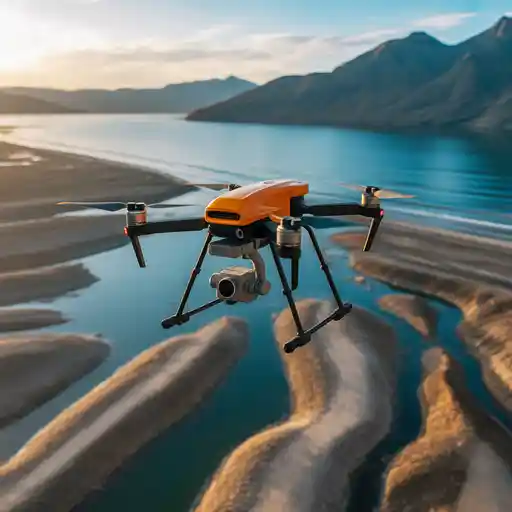
Drones have had a huge impact on the data collection and analysis process in industries radically. One of the fields that have gone through an enormous change is surveying. Surveying has always been a slow and labor-intensive process but with the use of the modern LiDAR system the ground survey has been replaced by the drone which is faster and safer. Today, Drone LiDAR Mapping together with Skyelink is changing the norms regarding precision, efficiency, and safety in aerial topographic surveys through the use of high-tech drone technology.
Now, what gives a drone the edge among the topographic survey tools? Let us take a closer look at the new standards of data accuracy and mapping excellence set by the modern drones in conjunction with LiDAR systems.
1. Speed and Efficiency in Data Collection
Conventional ground surveys can last for several days, or even weeks, to be completed. Surveyors move around collecting data from one point to another manually and that too in tough terrains. Drones, however, can fly over vast areas in no time.
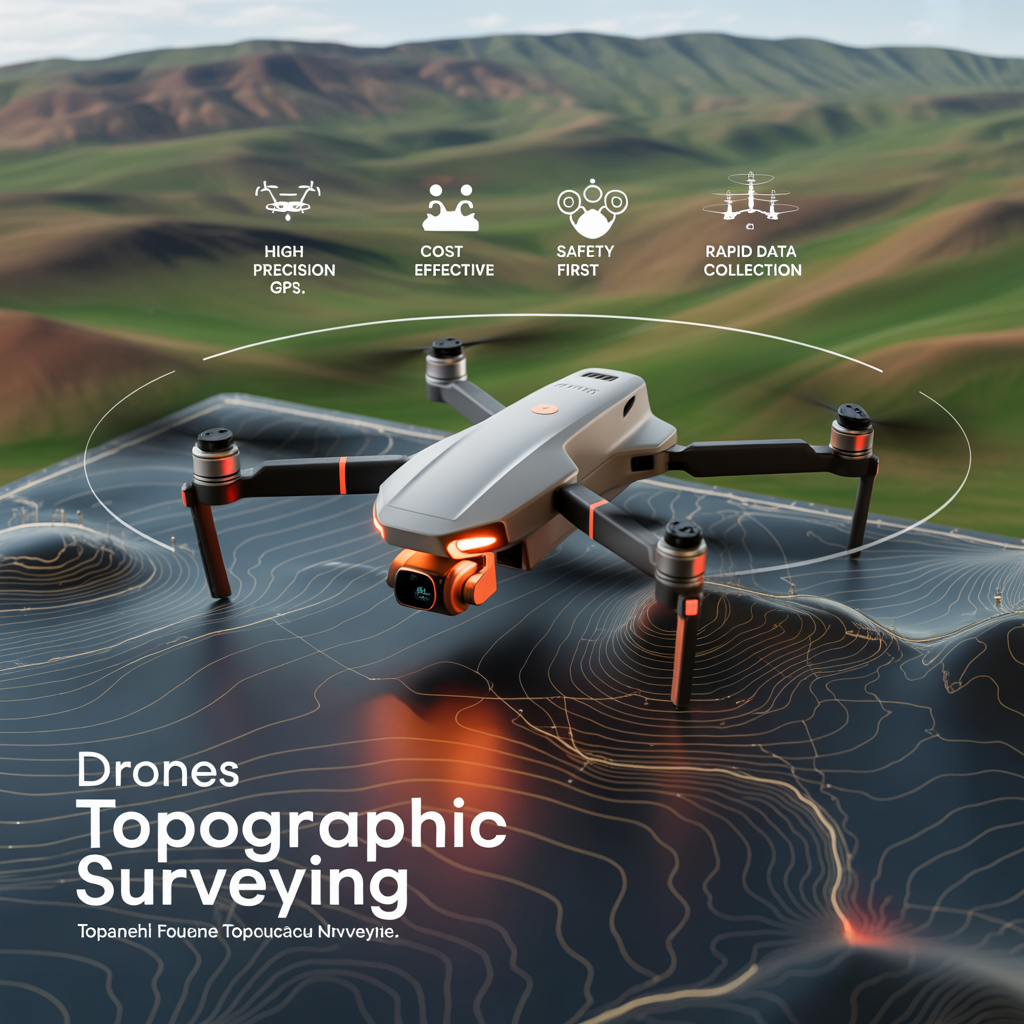
The aerial topographic survey with the drone can produce millions of data points within just a few hours and it can also make a very detailed 3D terrain model. The quick turnaround time allows dispersing engineers, architects, and planners to make quicker decisions; hence, there has been a reduction in the project timeline.
At Drone LiDAR Mapping, the drone systems we use are advanced and equipped with high-end sensors that not only ensure quick but also very precise results—perfect for big infrastructure, construction, and environmental projects.
2. Superior Accuracy with LiDAR Technology
LiDAR (Light Detection and Ranging) has been a revolutionary technology that the topographic mapping drones have on their side. The system employs laser pulses for determining the distance to the ground, therefore, giving accurate elevation data all the way through the dense vegetation.
On the contrary, photogrammetry which is highly dependent on images and lighting conditions might not always produce accurate results while LiDAR will give out precise, dependable results in a storm or when the lights are out. Furthermore, the perfect combination with RTK (Real-Time Kinematic) GPS systems allows the drones to operate with centimeter-level precision thus equalling or even overtaking the traditional surveying tools.
That is why drones with LiDAR become the main source of topographic surveys, particularly when mapping forest, mines, or rough terrain where the visibility is very low.
3. Accessibility in Challenging Terrains
Surveying remote or rugged terrains has always been a challenge. Steep slopes, marshy areas, and unstable surfaces not only slow down the process but also pose safety risks to human surveyors.
With topographic mapping drones, these challenges are minimized. Drones can easily fly over rough terrains, water bodies, or dense vegetation, collecting detailed surface data without putting human teams in danger.
This makes aerial surveys particularly valuable for industries such as mining, forestry, and energy—where the landscape can be difficult or dangerous to access.
4. Cost-Effective Data Acquisition
Drones for topographic surveys offer significantly lower operational costs as their biggest benefit. In most cases, traditional surveys require not only crews composed of various specialists but also the use of top-tier ground equipment along with fieldwork stretching for several days.
On the contrary, drones involve less deployment and can be handled by a team of not more than three. The fast data capture plus the reduced need for manual labor mean that businesses are actually reaping huge savings in their operations.
At Drone LiDAR Mapping, we support organizations in maximizing their budgets but at the same time not giving up on precision and excellence. Our aerial topographic survey solutions are not only cost-effective but also provide a quick turn-around time similar to traditional survey methods.
5. High-Resolution 3D Mapping and Visualization
A topographic mapping drone doesn’t only provide data about the heights of different parts of the terrain—it generates 3D models with very high resolution, which the users can use to see the surfaces of the earth with great detail. The use of digital terrain models (DTMs) and digital surface models (DSMs) helps the engineers to quickly check slopes, drainage systems, and other geographical features.
When applying LiDAR in these 3D visualizations, the results are even more powerful and exact volume computation for earthworks, cut-and-fill analysis, and planning of construction become possible.
The synergy between Skyelink’s drone technology and Drone LiDAR Mapping’s know-how guarantees that clients are supplied with precise, intricate maps that can also easily be assimilated into CAD or GIS platforms.
6. Enhanced Safety and Reduced Human Error
Hazards like unstable ground, severe weather, or noisy construction areas are the main risks surveyors face during fieldwork. In an event of using drones for data collection, survey teams can work from a safe distance.
Along with safety, drones also decrease human mistakes. Automated flight paths along with advanced sensors make data collection to be always consistent, repeatable, and accurate—delivering the same reliable results each time.
7. Scalability for Projects of All Sizes
No matter if you are going to do a small construction site survey or making a city plan, drone-based surveys are able to adjust along with any project. The flexibility of drone systems gives it a chance for professionals to create their own flight plans, change the altitudes, and alter the sensors in accordance with the project.
Drone LiDAR Mapping boasts that our technology is capable of the varied project requirements—be it aerial topographic surveys, flood risk assessments, urban planning, or agricultural monitoring. Drones’ scalability is a reason why they are a must-have for modern geospatial analysis.
8. Eco-Friendly and Non-Invasive Approach
The use of drones instead of heavy ground equipment is one way to produce a small environmental impact. Drones do not frighten wild animals or trees and they are very quiet to the ears of humans in the ecosystem that are very sensitive. So their non-invasive approach is officially accepted in projects of environment and conservation where the preservation of nature is the first priority.
The organizations can adopt aerial topographic surveys to collect very specific environmental data alongside the conduct of sustainable surveying practices.
Conclusion: The Future of Topographic Surveys is in the Air
The future of land mapping will unquestionably be aerial. Drones have transformed the way experts see and interact with terrain data, providing a mix of speed, precision, safety, and cost-effectiveness.
At Drone LiDAR Mapping, which is powered by Skyelink, we are delighted to be the leaders in this change, along with industries in realizing the full potential of aerial topographic surveys. Our cutting-edge solutions in drone and LiDAR bring you the most accurate data possible and that means your projects will be based on trustworthy and top-notch geospatial insights.
If you are in search of the finest drone for topographical surveys or seeking expert advice on topographical mapping drones, then Drone LiDAR Mapping is the best and reliable partner for precision-driven results that will not only meet but also exceed your expectations.