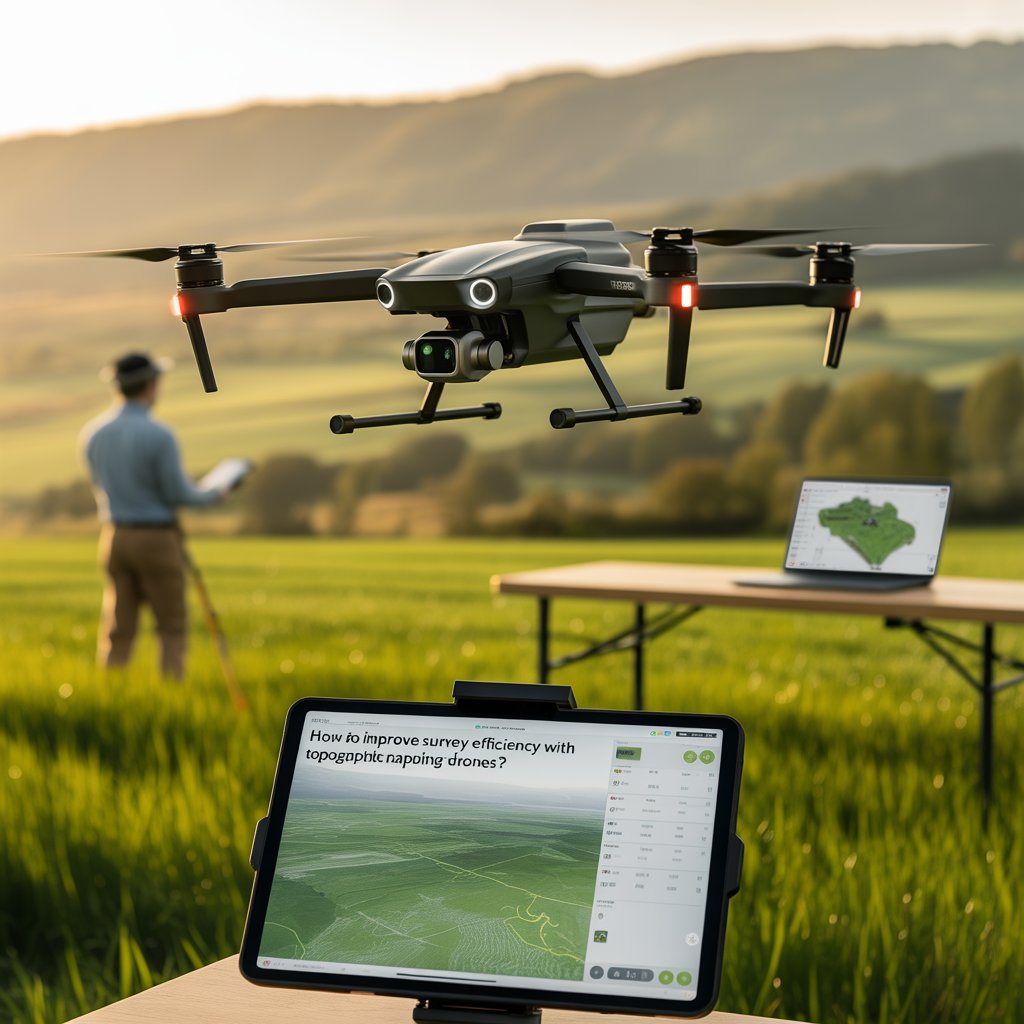
Land surveying has always been the foundation of construction and development. It gives the exact numbers needed for roads, buildings, and planning cities. But old-school methods take time. Crews spend days or even weeks on-site. They deal with rough terrain and unpredictable weather. It’s exhausting and expensive.
Now, imagine getting that same data in just a few hours. That’s what drones bring to the table. A topographic mapping drone does the aerial topographic survey faster, with better safety and more accuracy. It’s not just another fancy tool. It’s a shift in how surveys get done.
From Ground Crews to Sky Views
Surveying used to mean walking every inch of the land. Crews used stations, levels, and GPS gear. They collected data one point at a time. It worked, but it was slow. Big or complex sites could take weeks, which meant delays and higher costs.
Even with GPS, the team still had to cross muddy fields and climb hills. That took effort. Then drones entered the scene.
Now, a topographic mapping drone can fly overhead and scan the area from above. It grabs all the needed data while staying in the air. The job gets done quicker and with less hassle. Surveying finally caught up to modern tech.
Why Drones for Aerial Topographic Surveys Are Winning?
People can’t stop talking about drones. And for a good reason. They offer serious benefits when it comes to large or tough projects.
Here’s what makes them better:
- Speed
A drone can map a huge area in just a few hours. What once took days now wraps up before lunch.
- Accuracy
Modern drones have high-end sensors. They collect millions of data points and create sharp 3D models. Engineers also appreciate that level of detail.
- Safety
No need to send people into risky areas. The drone goes instead. It handles steep slopes, thick forests, or active job sites. Survey teams stay safe.
- Lower Costs
Fewer people and less time mean you spend less. Drones save money long term.
- Detailed Data
Drones don’t just scan. They bring back rich images and full 3D data. It’s like upgrading from a sketch to a high-resolution photo.
Drones are fast, smart, and safe. That’s why they’re a favorite tool for modern aerial topographic survey jobs.
What Makes LiDAR So Special?
LiDAR takes it all a step further. It stands for Light Detection and Ranging. It uses laser pulses to calculate distances and create detailed 3D maps.
Here’s how it works:
- The drone flies with a LiDAR sensor
- It fires off millions of laser pulses
- Each pulse hits the ground or an object
- The time it takes to bounce back is recorded
- That time gives the exact distance
- These distances build a 3D point cloud
This point cloud gives a full view of the land. You see the shape of the earth, buildings, and even trees. And LiDAR can cut through leaves and branches. So even in dense forests, it maps the ground underneath. That’s a big win.
At Drone LiDAR Mapping, we use this tech every day. We specialize in providing high-quality LiDAR (Light Detection and Ranging) mapping services using advanced drone technology. Our mission is to revolutionize the way businesses and industries collect, analyze, and utilize geospatial data. Whether it’s land planning or environmental work, we bring clean and clear data fast.
Choosing the Best Drone for Topographic Survey
Not every drone is ready for serious mapping. If you’re looking for results that matter, you need the best drone for a topographic survey. Here’s what to focus on:
- Payload
Your drone must carry a LiDAR sensor. Some sensors are heavy, so the drone must be built to handle the load.
- Flight Time
Longer flight time tells you can cover more ground in one go. That saves time on larger sites.
- GPS Accuracy
Choose drones with RTK or PPK systems. They offer high accuracy for location data.
- Sensor Compatibility
The drone and sensor must work well together. That gives you cleaner data.
- Toughness
The drone should handle wind, light rain, and rough conditions. You need gear that’s ready for the field.
- Software
Good drones need great software. Make sure it supports LiDAR processing and photogrammetry tools.
Pick the right drone, and your survey game goes up. Accuracy improves. Efficiency skyrockets.
Where Aerial Topographic Survey Drones Shine
Drones are being used in all sorts of industries. They offer fast results, sharp detail, and cost savings.
Here’s where they shine:
- Construction
Drones help with site surveys, progress checks, and material calculations. That keeps projects on track.
- Mining
They scan mine pits and stockpiles. They also spot hazards without halting work.
- Land Development
Planners use drone data to design layouts and run environmental checks.
- Environmental Work
Drones track erosion and flood risks. They also help monitor vegetation and water flow.
- Forestry
LiDAR sees through trees. This helps with forest mapping and biomass studies.
- Farming
Farmers use drone maps to manage crops, plan irrigation, and boost yield.
If land needs measuring, drones do it better and faster.
What to Watch Out For
Drones are powerful tools, but they still need skill and planning. Keep these things in mind:
- Regulations
Each country has drone laws. Make sure you have the right paperwork and stay compliant.
- Software Skills
LiDAR data needs to be processed. That takes the right tools and know-how.
- GCPs
Ground control points improve accuracy. Place them on the site before flying.
- Weather
Bad weather can delay flights. Choose a good day with stable conditions.
- Training
Your team should know how to fly, collect, and process the data. Or you can call experts.
At Drone LiDAR Mapping, we handle it all. From flying to processing, we take care of the details.
Conclusion
Topographic mapping drones have changed the survey world. They bring faster work, more precision, and better safety. It’s no longer just about old-school tools. The future is in the sky.
At Drone LiDAR Mapping, we help businesses upgrade their aerial topographic survey process. Our LiDAR drone services give you solid results with fewer delays and better insights.
From planning to execution, drones now play a key role. They help teams work smarter and make better choices. This is more than a