
Ever tried mapping a large area using traditional tools? It takes forever. You need a big crew. The terrain can throw off your accuracy. Weather delays things. Safety becomes a concern. Costs start piling up.
A LiDAR drone survey changes that. It’s fast and sharp. And it covers all kinds of terrain with ease. Hills, trees, or water, no problem.
You get detailed data without slowing down your project. No need to shut down sites or send teams into risky areas. Just launch, scan, and get results.
In a fast-moving world, speed and accuracy matter more than ever. Whether it’s construction, mining, or land development, accurate data can make or break your project.
Key Takeaways:
- LiDAR drone surveys offer faster results with better accuracy.
- Drones handle challenging, remote, or unsafe areas with ease.
- A reliable drone survey company helps cut costs and boost safety.
- Drone mapping is now widely used in industries like mining, construction, and agriculture.
What is a LiDAR Drone Survey?
LiDAR (Light Detection and Ranging) utilizes laser pulses to measure distance. The result is a 3D map of the surface below. When this system is mounted on drones, it becomes a powerful mapping tool.
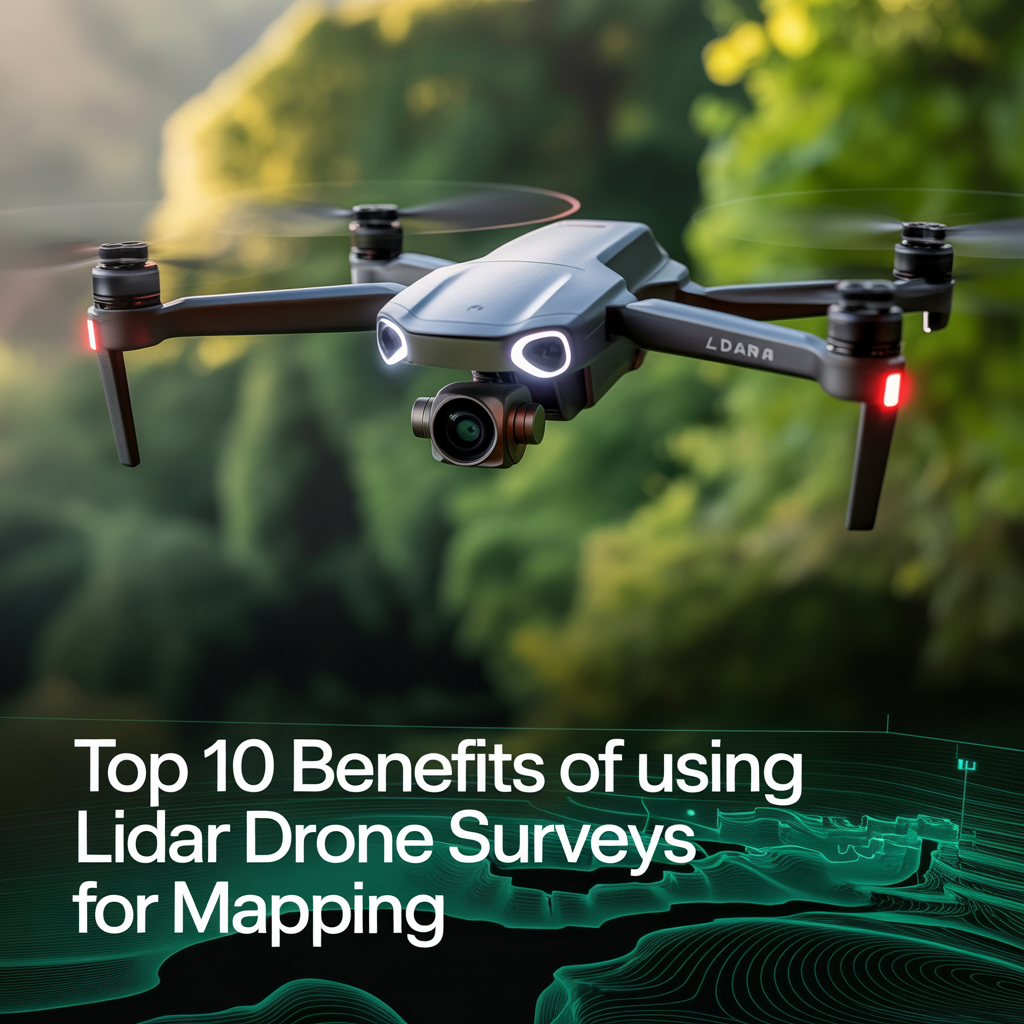
Drones fly over your site and scan it from the air. The LiDAR sensor sends out thousands of laser pulses each second. These bounce off the ground, trees, and buildings. The drone collects the data to build a clear image of the land.
It’s not just high-tech gear. It’s already used every day by companies that need fast, solid data.
1. Faster Data Collection
Time on-site is cut down. A LiDAR drone survey can map huge areas in a few hours. Traditional crews might take days or weeks.
Whether you’re working in fields, forests, or urban spaces, drones get it done quicker. This means shorter project timelines and faster delivery of results.
2. Better Accuracy
LiDAR sensors pick up millions of data points. That gives your team a much deeper and more detailed look at the land.
Even slight changes in height or slope are recorded. This level of detail helps teams avoid mistakes during planning or building. If accuracy matters to your project, LiDAR delivers.
3. Access to Hard-to-Reach Areas
Some areas are just tough to get to. Steep hills. Thick woods. Wetlands. However, they still need to be mapped.
LiDAR drones fly above these zones with no problem. You get your data without sending people into risky or rough terrain.
If you’ve searched for a “drone surveying company near me” to help with tricky land, this is the kind of tech you need.
4. Enhanced Safety
Traditional surveying means boots on the ground. That often means risk. Busy roads, power lines, or steep areas can all pose danger.
With aerial LiDAR survey services, drones do the hard work. The crew stays safe and off-site. Your project stays safe. So does your team.
5. Cost-Effective Results
LiDAR drone mapping may seem pricey at first. But factor in labor, time, and repeated visits, and it starts to save money.
Drones cut down on workers, reduce errors, and speed up the whole process. Less time means fewer costs. This is one reason more businesses are choosing drones.
6. Rich Data Output
LiDAR surveys offer more than basic measurements. You get full 3D point clouds, surface models, and even vegetation data.
This gives engineers and planners more tools to work with. And all from a single drone flight. You get more insight from one trip to the site.
7. Minimal Disruption
Construction zones are busy. Farms need to keep working. A ground crew might slow everything down.
Drones fly above it all. No one has to stop work. No tools or tripods in the way. You collect your data without slowing the project.
8. Works in Any Environment
Mountains, snow, forests, or cities, drones can handle it. The laser still works even through thick leaves or brush.
You don’t need to clear land before mapping. That saves time and effort. From deserts to dense woods, drones do the job.
9. Scalable for Big or Small Projects
Need to scan a backyard or a large highway project? Drones scale easily.
Whether it’s a small site or hundreds of acres, drone mapping adjusts to fit. That flexibility works for city planners, real estate pros, and big developers.
10. Smarter Project Planning
When your data is detailed and clean, you plan better. No surprises during work. No sudden design changes later.
Everything is based on solid information from the start. That saves money and avoids delays. Good planning starts with good data. LiDAR helps you get it.
Why Choose Drone LiDAR Mapping?
We specialize in providing high-quality LiDAR mapping services using advanced drone technology. Our mission is to revolutionize the way businesses and industries collect, analyze, and use geospatial data.
Our network includes FAA Part 107 certified pilots and licensed surveyors. We work across the country and handle all kinds of terrain. Whether it’s a topographic survey, boundary survey, or a construction site, we’ve got it covered.
We provide high-precision data for topographic maps, ALTA surveys, land use planning, and more. We help you build, plan, and succeed with clear aerial insights.
If you need a drone survey company that’s reliable, experienced, and nationwide, we’re ready to help.
Conclusion
LiDAR drone surveys are the future of mapping. They save time, boost accuracy, and reduce risk. Drones reach places people can’t and deliver high-quality results in less time.
They work for every kind of project: big or small, simple or complex. From forests to highways, they make the job easier. You get cleaner data and faster results. That’s a win for any business.
At Drone LiDAR Mapping, we deliver trusted aerial LiDAR survey services with speed and accuracy. Our skilled pilots and surveyors help you collect the data you need without delay.
Stop wasting time and money with slow, risky methods. Let drones handle the heavy lifting. Smarter surveys start in the sky. Get your next project off the ground with Drone LiDAR Mapping.