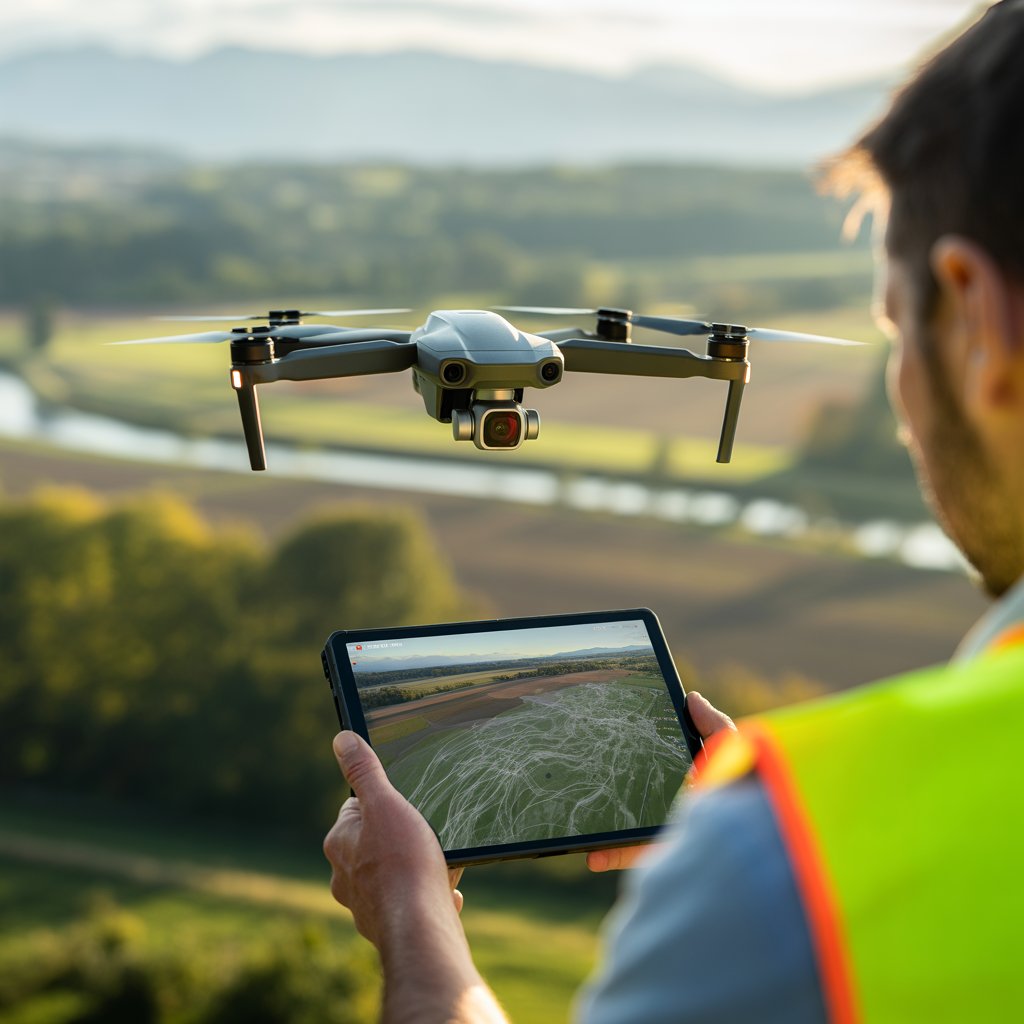
Drones are a big part of how we collect and use maps and land data in today’s world, which changes quickly. It’s no longer just a trend to use drones for surveying and mapping. These tools are quickly becoming necessary in fields like civil engineering, building, real estate, and environmental management.
Drones are making surveying faster, safer, and more accurate than ever. They can quickly cover big areas and make maps with lots of details. They even follow strict rules, like ALTA survey standards, which used to be possible only with old-fashioned ways of surveying land.
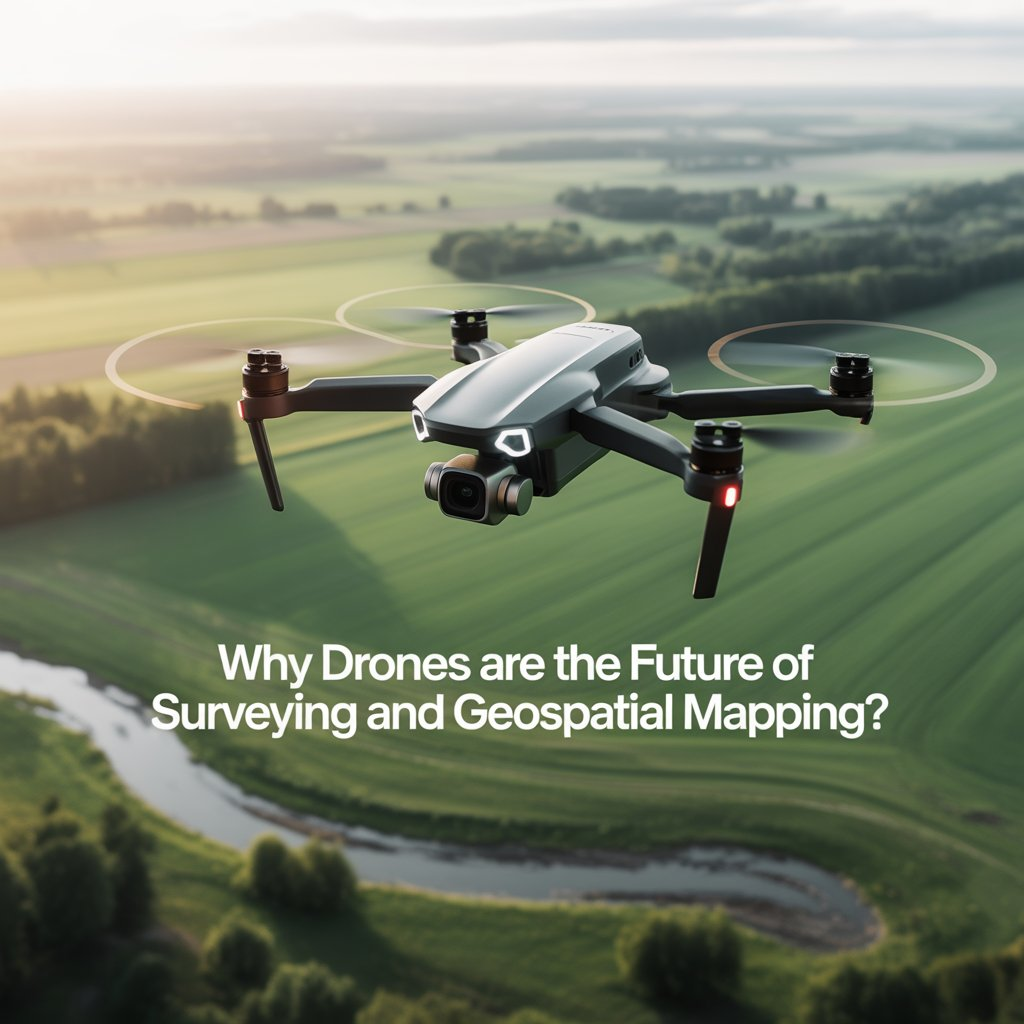
Let’s explore why drones are the future of surveying and geospatial mapping.
Drones Speed Up the Surveying Process
Drones save a lot of time, which is one of their best features. Land studies, the old way, can take days or even weeks. They need a lot of people to work on-site and a lot of expensive tools. Drones cut that time down a lot.
A drone can fly over a large area in just a few hours if it has good cameras and LiDAR sensors. Some surveys can be done five times faster with drones than with standard tools. This leads to faster project decisions, faster design work, and lower costs.
Surveyors can also spend less time in the field when they use drones. This is helpful for places of work that are busy or dangerous, like building sites or land that is important to the environment. With just one short stop, teams can get all the information they need.
High Accuracy and Detailed Data
Drones for surveying and mapping are very good at being precise, which is essential for surveying. Drones today gather very accurate data with the help of powerful software, advanced sensors, and global navigation satellite systems (GNSS). Drones can be accurate to within one centimeter when everything is perfect.
To do all kinds of math, like counting slopes, volumes, and boundaries, you need this level of accuracy. Helicopter data helps you plan a road, build a site, or look at how land is used. It also makes your work more accurate and easy.
Drones use two key technologies for mapping:
- Photogrammetry takes lots of overlapping images to create 3D models.
- LiDAR, which uses laser pulses to scan and map ground surfaces, even through thick vegetation.
Surveyors can get high-density point clouds, clear aerial images, and digital elevation models from both ways. The best part is that this information is simple to use in design programs like CAD and BIM, which makes working together and planning much easier.
Better Safety for Survey Teams
It can be dangerous to survey. There are safety issues when working on slopes, walking through dense forests, or close to busy construction sites. By letting you collect data from the air, drones get rid of many of these risks.
Drones can fly over an area and take pictures from a safe distance, instead of sending people into dangerous or hard-to-reach places. This makes crashes less likely and cuts down on the need for insurance claims or extra safety gear.
Drones can be used to do things like:
- Make maps of high hills or rocky areas
- Check out building sites without bothering workers or machines.
- Keep an eye on dumps or mine sites.
- Check out power lines, bridges, or towers.
Surveyors can stay safe and get the correct site data at the same time with drones.
Drones Help Meet ALTA Survey Standards
For major land deals or commercial property development, surveys often need to meet ALTA (American Land Title Association) standards. These surveys are very detailed and must show exact property lines, easements, rights-of-way, and improvements.
Previously, these surveys were done manually and took a lot of time and effort. Now, land surveying drones help make this process faster and more accurate.
Drones can scan entire properties and capture high-resolution data from the air. Surveyors use this data to:
- Confirm boundaries
- Detect any encroachments
- Map out buildings, roads, and other features
- Meet every requirement of the ALTA standards.
Many clients, title companies, and government agencies now accept drone data for ALTA surveys. This growing trust is helping more professionals make the switch to drone technology.
Expert Teams and National Coverage
All over the US, you can find reputable drone mapping companies that do professional work and follow all state and federal laws. To make sure everything is done right, they work with pilots who are licensed under FAA Part 107 and who are approved by the state.
When these teams register drones and fly them, they follow the FAA’s strict rules. On top of that, they have insurance and follow the best methods for safety and data handling.
Based on your project, study companies can make custom drone plans for
- Large maps of the land
- 3D photos of small areas
- Checking of utility lines
- Ongoing monitoring of work
Because of this, drones can work on any job, no matter how big or small, anywhere in the country.
Saves Money and Supports Sustainability
Drones are a great way to do surveys because they save time and money. The general cost of the project goes down because fewer people are needed in the field and the work gets done faster. Costs for equipment and downtime at the spot are also cut down.
Regarding climate change**, land surveying drones** make less noise, use less fuel, and reduce heavy machinery use. They make less noise, use less fuel, and cut down on the need for big machines. They cut down on mistakes and extra work by getting the correct data the first time.
This saves time, money, and materials. Drone mapping is an innovative and environmentally friendly choice for fields that care about doing things in a green way.
Future-Proofing with Drone Technology
Year after year, drone tech gets better. With the new changes, drones are even stronger and easier to use.
Here are a few exciting trends:
- Longer battery life – Fly longer and cover more area on a single charge
- More innovative software – Use AI to process data quickly and detect changes over time
- Autonomous flights – Pre-program routes and let the drone fly on its own
- Real-time updates – Get live data feeds from the job site to your office
These developments make drones for surveying and mapping even more capable, including real-time 3D mapping and autonomous inspections.
People who use drone tools now will stay ahead of the game. Drone skills and tools will be necessary for everyone in the future, whether you’re a surveyor, developer, engineer, or environmental manager.
Concluding Words
Thanks to drones for surveying and mapping, we can now see and measure the world in new ways. It is their speed, accuracy, safety, and adaptability that make them the best in surveying and geospatial maps.
They help teams work faster, follow strict rules like ALTA survey requirements, and keep workers safe. The data gathered by drones is also more detailed, easier to handle, and can be used in modern software for planning and designing.
As technology keeps getting better and more businesses agree to use drone data, these flying tools are becoming necessary for innovative, accurate, and cost-effective surveys.
Are you ready to fly?
At this point, you should use drones if you work in real estate, building, engineering, or land development. If you buy a drone scanner today, you’ll get better results tomorrow. You’ll stay ahead of the competition, save time, and cut costs.
Visit us at DroneLidarMapping.com now to get started and stay ahead of the competition with innovative, sustainable surveying solutions.