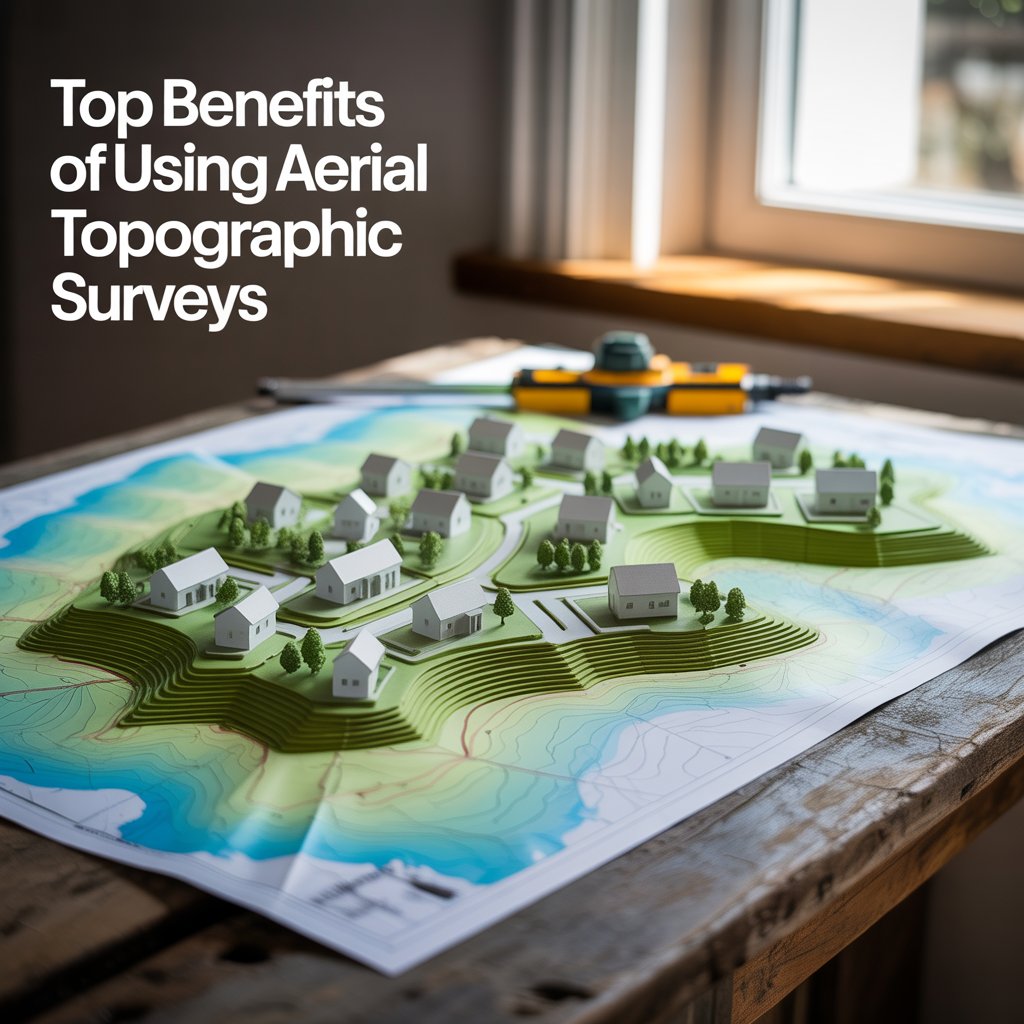
When you look at a piece of land, every slope, drain, and clump of trees matters. How it all connects can make or break a project. That’s why aerial topographic surveys are such a game-changer. They give you a clean, bird’s-eye view of the land, fast, and help you plan smarter, not harder.
Instead of deploying teams equipped with equipment that can take days to complete, you can get precise 3D maps in just a only a fraction. When you’re building streets or grade lots, you’re working with real ground, not guesses.
According to the U.S. Geological Survey, drone-based mapping can produce imagery with horizontal resolution as fine as 5–10 cm and vertical accuracy within 8 cm, all for much lower cost than traditional LiDAR methods. That kind of clarity and value is tough to beat.
Key Takeaways
- Fast, accurate mapping with aerial topographic surveys.
- Delivers 3D terrain info that designers, engineers, and planners need.
- Cuts costs, keeps crews safe, and covers more ground quicker.
- Platforms like Drone Lidar Mapping (via Skye Link) deliver survey-quality LiDAR, contour maps, and orthomosaics.
- Shows real wins in permitting, safety, and cost down the line.
Why aerial topography matters in real-world land development
You can’t build on wild guesses. If your slope is wrong or your drainage is off by inches, things go sideways fast. Aerial mapping gives clarity.
Drone LiDAR mapping for site intelligence
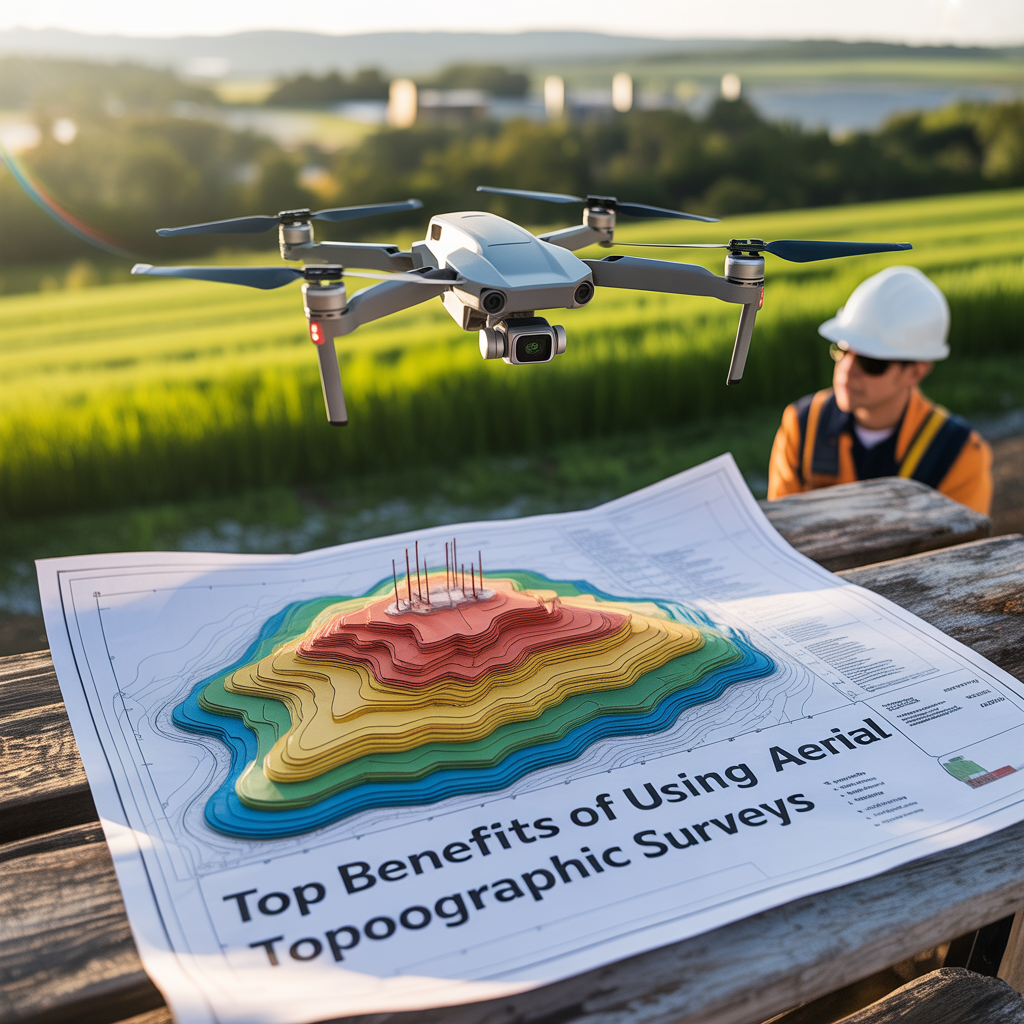
A drone sweeps the site and gathers millions of precise points in minutes. You get data even beneath trees, so your engineers work off ground truth, no more guesswork. That’s the power of a drone topographic survey.
3D terrain models that drive design
Flat maps won’t cut it. You need DTMs, DSMs, and contour maps, all ready for CAD. That’s exactly what aerial topography delivers, and it helps teams plan roads, drainage, and building layouts with confidence.
Deliverables you can actually use
Raw data is great, but not if nobody can interpret it. Aerial surveys give you usable maps.
High-resolution orthomosaics
Think of a huge, detailed aerial photo, stitched together and georeferenced. These orthomosaics let you see every detail: fences, ravines, even individual shrubs.
Contour mapping and elevation outputs
These are not sketches. Aerial data gives precise contour lines and elevation layers you can trust for grading and drainage.
CAD/GIS-ready exports
DTMs, contour lines, and orthomosaics can all go straight into CAD or GIS. No extra legwork for your engineers.
Speed and cost benefits over old-school surveying
Time is money. Here’s where drones really shine.
Faster data capture: acres in hours.
A field crew might take days to survey. A drone can finish the same work in hours. That means quicker decisions and faster progress.
Lower mobilization and safety costs
This is what “drone surveying for construction” is all about: one skilled pilot up top, not a team slogging through mud. Safer, leaner, cheaper.
Safer, easier, greener surveying
There’s more to the story than just time and money.
Safer work in risky areas
Steep hills, marshlands, dense brush, ground teams struggle there. Drones make it easy and safe to get accurate data without putting anyone in danger.
Eco-friendly with a lighter footprint
No heavy machinery, fewer disturbances, less soil damage. Drones map quietly and cleanly.
Where aerial surveys shine on construction sites
Let’s talk real apps, not theory.
Construction aerial mapping & monitoring
Project teams use drone flights weekly to see progress, check earthwork, and confirm contractor work, all without leaving the office.
Earthwork calculations & grading plans
Accurate cut-and-fill volumes save hours in planning and dollars on the bill.
ALTA/NSPS boundary integration
Boundary accuracy matters, especially for commercial sites. Aerial data fits right into ALTA/NSPS standards when reviewed by licensed professionals.
Picking the right gear and process
Not just any drone will do.
LiDAR vs. photogrammetry
LiDAR punches through trees to map the ground. Photogrammetry is great for open sites, but misses the under canopy. Choose smart based on your terrain.
What makes the best drone for topographic survey
You want long flight time, RTK GPS, and payload capacity for LiDAR. That’s your baseline.
What a topographic mapping drone needs
High accuracy, stable flight, dense data capture, and easy integration. That’s what sets pros apart.
Turning drone data into real deliverables
Raw data isn’t the end goal; it’s the start.
Processing point clouds into ground-ready models
You clean, classify, and turn millions of points into DTMs in software so engineers can use them immediately.
Sharing with stakeholders
Final files, LAS, DWG, GeoTIFF, make it easy for everyone to see what matters.
Real wins from real projects
Here are projects worth noting.
Residential subdivision planning
A developer needed layout maps fast. Drone Lidar Mapping delivered in two days, saved weeks of ground work, and permits went through quicker.
Solar farm alignment
Using Skye Link’s mapping teams, a solar developer mapped 500 acres in under a week. The terrain data helped align panels better and reduce shade loss.
Best practices
- Fly when the weather is calm.
- Include ground control for precision.
- Use LiDAR under trees, photogrammetry in open areas.
Costs, ROI, and vendor checklist
Let’s get practical.
What to ask a drone survey provider
- What deliverables do you provide?
- How accurate is the data?
- How fast is delivery?
- Are pilots FAA-certified and surveyors licensed?
ROI in plain terms
- Faster project timelines.
- Fewer mistakes, less rework.
- Fewer field crews, fewer risks.
Build smarter with aerial maps.
That’s what aerial topographic surveys deliver: clarity, speed, and safety. Whether you’re walking a residential lot or planning infrastructure, the data you need arrives fast, and with no guesswork.
Professionals trust Drone Lidar Mapping, powered by Skye Link, for accurate, delivery-ready mapping, whether that’s contour models, orthomosaics, or LiDAR. You get trusted data, not just pixels.
Ready to speed up your projects, cut risk, and build with confidence? Reach out to Drone Lidar Mapping and get a smarter start.